
Having a good product or service is not always enough to attract customers. People need to know that your business exists, understand what makes it different, and have a reason to trust it. This is where digital marketing becomes important.
Digital marketing helps businesses connect with their target audience through search engines, social media, websites, and email. Whether you run a small business, manage a brand, or work in marketing, the right digital marketing strategies can help you improve brand awareness and reach potential customers.
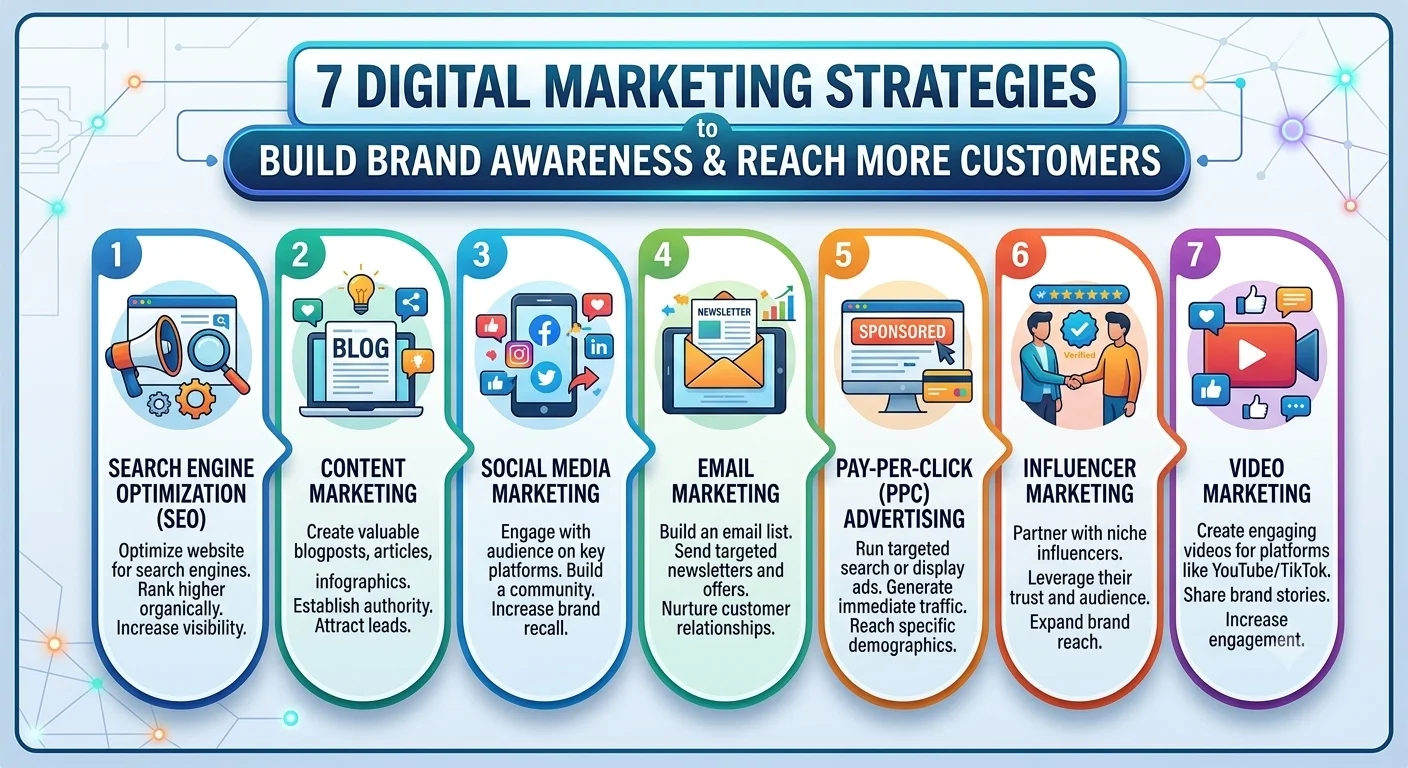
You do not need to use every marketing channel at once. Start by understanding your audience, choosing the right platforms, and sharing content that provides real value. Here are seven practical ways to strengthen your online presence.
1. Use Digital Marketing Strategies to Build a Strong Social Media Presence
Social media is an effective way to introduce your business to people who may not know about your brand. Platforms such as Instagram, Facebook, LinkedIn, and YouTube allow businesses to share content, interact with customers, and showcase their products or services.
However, posting regularly is not enough. Your content should give people a reason to stop scrolling and pay attention.
Start by identifying the platforms your target audience uses most. A fashion or lifestyle brand might focus on Instagram, while a business-to-business company may benefit more from LinkedIn.
Share a mix of educational posts, behind-the-scenes moments, customer experiences, product demonstrations, and short videos. Keep your visual style and communication consistent so people can recognise your brand easily.
Remember to interact with your audience. Respond to comments, answer questions, and join relevant conversations. Social media works best when you build relationships instead of using it only to advertise.
2. Invest in Search Engine Optimisation (SEO)
Search engine optimisation, or SEO, helps people discover your website when they search online for information, products, or services related to your business.
Begin by researching the keywords your potential customers are likely to use. Include relevant phrases naturally in your page titles, headings, blog posts, and image alt text.
For example, a public relations consultant could publish articles about media relations, brand communication, and personal branding to reach people interested in these subjects.
Useful blog content can attract visitors who are looking for answers to specific questions. Make sure your website is easy to navigate, mobile-friendly, and provides a good user experience.
SEO takes time, and reaching the top of search results is never guaranteed. However, publishing helpful content and improving your website consistently can strengthen your online visibility over time.
3. Publish Valuable and Relevant Content
Content marketing involves creating information that educates, informs, or helps your audience. Instead of promoting your products in every post, focus on answering questions and solving problems your potential customers face.
Depending on your business, you could create blog articles, short videos, infographics, guides, newsletters, or frequently asked questions.
For example, a skincare brand could share tips for building a simple skincare routine, while a marketing consultant could explain common branding mistakes and ways to improve online visibility.
Before creating content, ask yourself what readers will learn and how the information will help them. The most useful content addresses genuine questions rather than simply repeating promotional messages.
Maintain a realistic publishing schedule. Sharing helpful content consistently is more effective than publishing several articles in one week and then disappearing for a month.
Over time, valuable content can help establish your brand as a reliable source of information and give people more reasons to remember your business.
4. Use Email Marketing to Stay Connected
Email marketing helps businesses maintain relationships with people who have already shown interest in their products or services. It allows you to communicate directly with subscribers who have chosen to receive your messages.
You can use email newsletters to share business updates, announce new products, provide useful information, introduce special offers, or promote upcoming events.
For example, an online clothing store might send updates about new collections, while a consultant could share practical tips and links to recently published articles.
Personalisation can make emails more relevant. Group subscribers according to their interests or previous interactions, then send content that suits their needs.
Keep your emails clear and useful. Write an informative subject line, include a simple call to action, and avoid sending messages too frequently. Always follow applicable privacy requirements, obtain appropriate consent, and provide an easy way to unsubscribe.
5. Collaborate with Influencers and Relevant Brands
Collaborations can introduce your business to audiences who might not discover it otherwise. Working with content creators, industry experts, or complementary brands can help expand your reach and strengthen credibility.
The key is to choose partners whose audience, values, and content style match your brand.
For example, a fitness business might collaborate with a fitness creator, while a restaurant could work with food reviewers or lifestyle influencers. A professional service provider might partner with an industry expert to host a webinar.
Before starting a collaboration, decide what you want to achieve. Your goal might be to increase brand awareness, attract website visitors, generate enquiries, or promote a new launch.
Discuss the deliverables, timeline, budget, and expected results in advance. Also, ensure that paid partnerships are disclosed appropriately.
A large following does not automatically make someone the right partner. A smaller creator with an engaged, relevant audience may deliver better results for your business.
6. Use Paid Digital Advertising Strategically
Paid advertising helps businesses reach specific audiences and promote their products, services, or events. Platforms such as Google Ads and Meta Ads offer tools for reaching potential customers through targeted campaigns.
Before spending money, decide what you want your campaign to achieve. You might want to increase website traffic, generate leads, promote an event, or encourage purchases.
Create advertisements with a clear message, relevant visuals, and a straightforward call to action. Make sure the landing page matches the advertisement so visitors can easily find the information they expect.
Start with a manageable budget and monitor performance. Metrics such as click-through rates, cost per lead, conversions, and return on advertising spend can help you understand whether your campaign is effective.
Do not increase your budget simply because an advertisement receives many views or likes. Focus on meaningful business results and test different messages or visuals to discover what works best.
7. Track Results and Improve Your Strategy
Digital marketing requires regular evaluation. Tracking results helps you understand which activities are working and where improvements are needed.
Choose metrics that match your goals. For brand awareness, monitor reach, impressions, branded searches, and website visits. For lead generation, track enquiries, conversion rates, and cost per lead.
Tools such as Google Analytics and social media analytics dashboards can provide useful insights into how people interact with your content and website.
Review your results regularly. Which topics attract the most attention? Which pages bring visitors to your website? Which campaigns generate relevant enquiries?
Use these insights to improve your approach. You might update your content, improve a landing page, test a different audience, or focus more on a channel that performs well.
Digital marketing is an ongoing process. Regular testing and improvement help your business adapt to changing customer needs and market trends.
Conclusion
Building brand awareness and reaching more customers requires a clear plan, consistent effort, and an understanding of your audience. Social media, SEO, content marketing, email marketing, collaborations, paid advertising, and performance tracking can all help strengthen your online presence.
You do not need to implement every strategy at once. Start with the channels that suit your audience, business goals, and budget. Monitor your progress and make changes based on what you learn.
Ultimately, successful digital marketing is not just about getting more views or followers. It is about helping the right people discover your brand, understand its value, and develop a lasting relationship with your business.